In this guide
What makes coffee "specialty"?
"Specialty coffee" isn't just a label bars put on a chalkboard to charge more. It's a real category with a real definition. Coffee graders score green beans on a 100-point scale, judging things like aroma, acidity, body, sweetness and aftertaste. Only beans that score 80 or above are allowed to call themselves specialty. Everything below that is commercial-grade coffee — the kind that ends up in generic supermarket blends.
That score depends on a chain of decisions made long before the beans reach a grinder:
- The species. Almost all specialty coffee is Arabica, not Robusta. Arabica plants grow at higher altitude, produce fewer beans, and yield a sweeter, more aromatic cup with brighter acidity — think berries, citrus, stone fruit, chocolate, florals. Robusta has roughly double the caffeine and about 60% less sugar and fat, which is part of why it tastes harsher and more bitter: bolder, earthier, closer to dark chocolate and wood. It's cheaper to grow and shows up mostly in instant coffee and traditional Italian-style blends, prized there for its thick crema.
- How the cherry is processed. After picking, the fruit around the bean (the "cherry") has to come off, and how that happens changes the flavor dramatically. Washed processing strips the fruit off before drying, giving a cleaner, brighter, more "transparent" cup. Natural processing dries the whole cherry in the sun first, letting the fruit sugars soak into the bean for a heavier, sweeter, more fruit-forward result. Honey processing sits in between, leaving some of the sticky fruit pulp on during drying.
- The roast. Lighter roasts preserve the bean's own origin character — its acidity, its florals, its fruit — which is why specialty coffee is usually roasted lighter than the dark, oily commercial blends. Roast it dark enough and almost any bean starts to taste the same: smoky, bitter, roasted. The differences between an Ethiopian and a Brazilian bean are loudest at a light-to-medium roast, and they fade the darker you go.
Put simply: specialty coffee means someone can trace your cup back to a specific farm or region, and every step after that — picking, processing, roasting, brewing — was a deliberate choice to protect the flavor that farm produced, rather than to hide it.
Granada's two coffee cultures
Granada has one of the strongest traditional coffee cultures in Spain, and it runs on its own rules. Order a "café con leche" here and it comes in a small, thick glass, with noticeably less milk than you'd get in Madrid or the north — locals like their coffee strong. Andalusia is proud of this, and it isn't going anywhere.
What's newer is the wave sitting alongside it. Spain came to specialty coffee later than most of Western Europe — the movement took hold first in Madrid and Barcelona, and only in the last several years has it spread south into Andalusia. In Granada specifically, a small number of independent roasters and baristas have opened shops built around single-origin beans, real espresso extraction and proper filter coffee, drawing in the city's large student population and its creative crowd. It's still noticeably easier to find a classic café con leche here than a well-pulled flat white — but that balance is shifting, year by year.
The four origins behind every cup
Beyond species, processing and roast, the single biggest flavor variable is where the coffee grew. Altitude, soil, climate and generations of local farming tradition all leave a fingerprint on the bean — coffee people call this terroir, borrowing the word from wine. Here's what that fingerprint looks like for four origins commonly poured in Granada's specialty shops, including the single-origin beans behind Coffee & Tea House's own menu.
Ethiopia — the birthplace of coffee
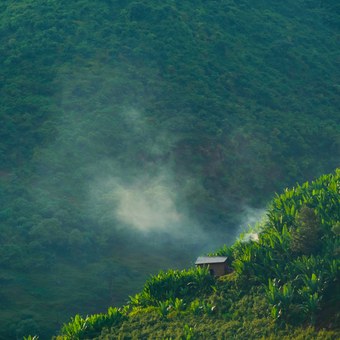
Coffee didn't come from a farm here — it came from the forest. Ethiopia is where the coffee plant originated, and its highland forests still hold thousands of wild, genetically distinct coffee varieties that have never been formally cataloged. Two regions do most of the talking: Yirgacheffe, known for washed beans with a bright, floral, almost tea-like character, and the wider Sidamo area, where naturally processed beans lean into berry sweetness and a wine-like weight. Either way, Ethiopian beans are usually the lightest-bodied and most aromatic of the four — the one that tastes most like fruit and flowers, least like "coffee" in the generic sense.
Colombia — the balanced classic
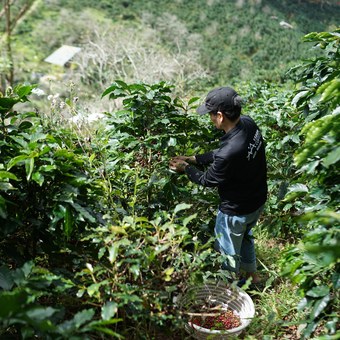
Jesuit missionaries are credited with bringing the first Arabica trees to Colombia in the early 1700s, and by the 20th century the country had built an entire identity around coffee. Most of it still comes from the Eje Cafetero, the "Coffee Axis" running through Caldas, Quindío and Risaralda — volcanic soil, steep hills and cool nights that slow the cherry's ripening down, letting more sugar build up inside the bean. The result is coffee that rarely surprises you and rarely disappoints you: medium body, balanced acidity, caramel and light chocolate, sometimes a touch of red fruit. It's the origin most people picture when they picture "coffee" done well.
Brazil — the chocolate powerhouse
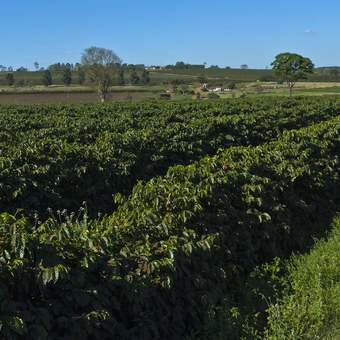
Brazil grows more coffee than any other country by a wide margin, and the Cerrado region in Minas Gerais — flatter, sunnier, with a long, reliable dry season — is a big reason why. That dry season is the key: it lets farmers dry whole cherries in the sun on open patios (the "natural" process) without them rotting, and it's this method, more than the terrain, that defines Brazilian flavor. Sugars from the fruit soak straight into the bean as it dries, producing a heavy-bodied, low-acid cup that tastes like caramel, milk chocolate, roasted nuts and brown sugar. It's the origin that makes the best base for milk drinks — nothing gets lost under steamed milk the way a delicate Ethiopian bean would.
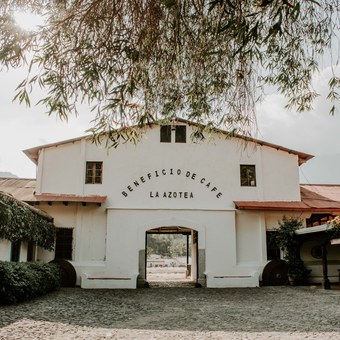
Guatemala — volcanic complexity
Coffee arrived in Guatemala around the same time as in Colombia, again through Jesuit missionaries, and it took root fastest around the town of Antigua — a valley ringed by three volcanoes, including the still-active Fuego. Volcanic ash isn't just dramatic scenery here; it constantly renews the soil with minerals and keeps drainage excellent, and coffee grown in it tends to develop real complexity. Antigua beans are full-bodied with a brighter acidity than Brazil's, built around dark chocolate, brown sugar and warm baking spice, often finishing with a faint, distinctive smokiness. It sits deliberately in the middle of this list: not as delicate as Ethiopia, not as heavy as Brazil.
Profiles above describe typical characteristics for each origin's common processing method — individual harvests, farms and roasts vary.
Where Cuesta de Gomérez fits in
Almost by definition, a "cup of specialty coffee" only exists because someone chose one of these four origins — or one like them — on purpose, instead of reaching for a generic pre-ground blend. That choice is exactly what happens at Coffee & Tea House, on Cuesta de Gomérez, the street that climbs from Plaza Nueva up toward the Alhambra. It's one of the most-walked streets in the city, yet it holds only two cafés — and this one stays open into the evening, later than most specialty shops elsewhere in town.
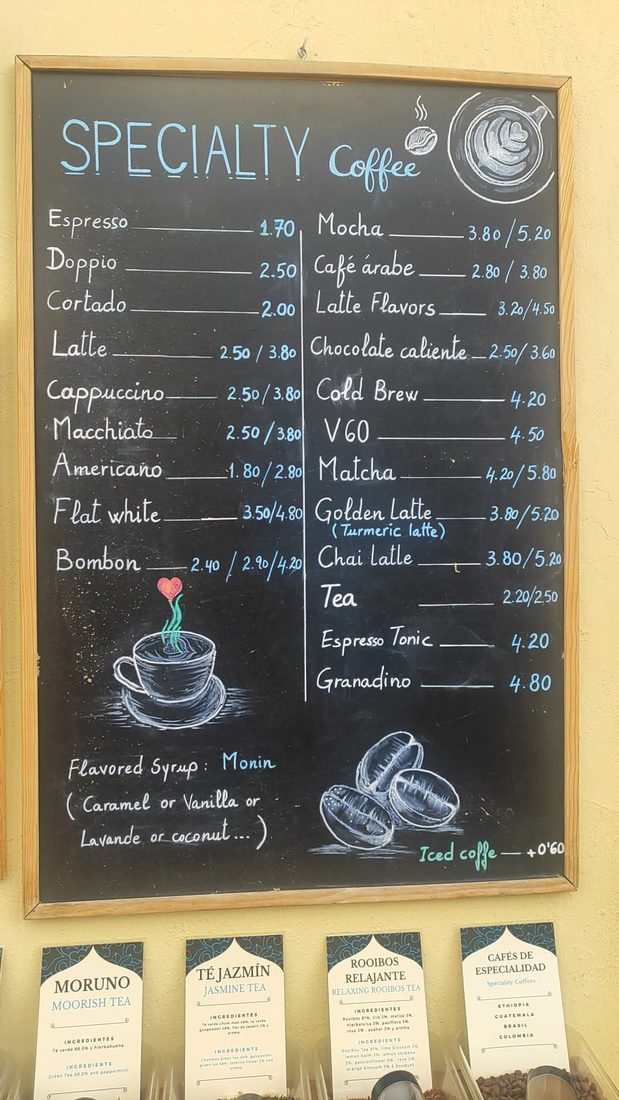
The menu runs on single-origin beans from all four countries above — Colombia, Brazil, Guatemala and Ethiopia — roasted for espresso and filter rather than blended into one flattened flavor. The house favorite pairs Brazil's forgiving body with Ethiopia's brightness in a cappuccino made from single-origin Ethiopian beans, pulled as a strong espresso and finished with steamed, good-quality local Granada milk. Anas and Osama, who run the counter, work by one rule that does more than any tasting note: if they wouldn't drink or eat it themselves, it doesn't go on the menu.
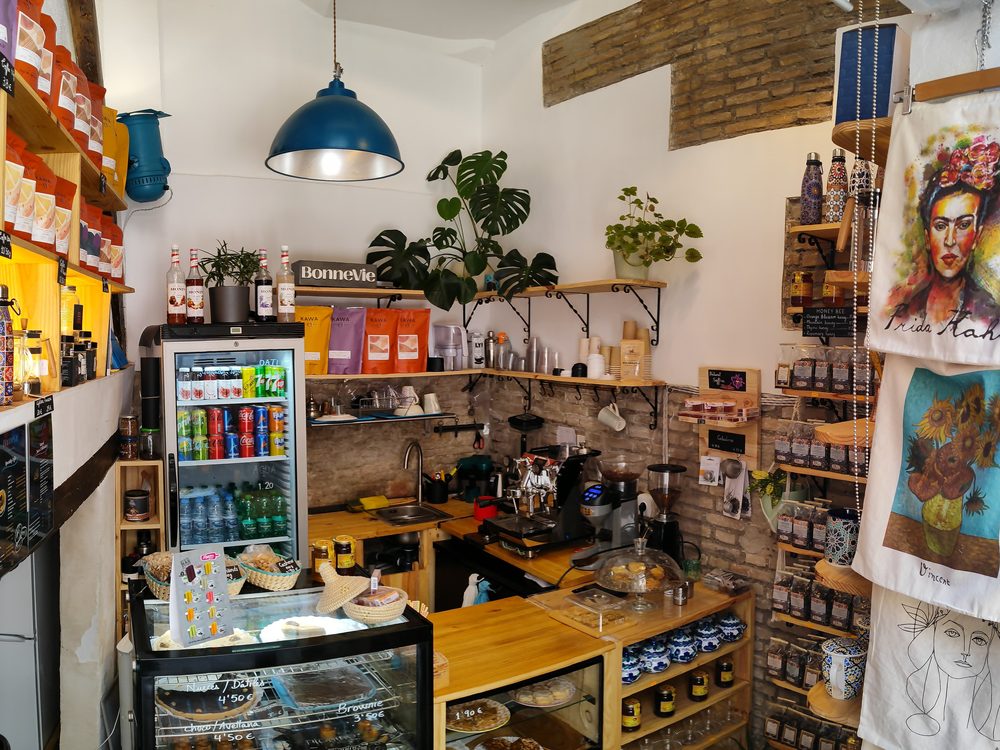
It's also a little different in shape from most specialty coffee shops, which tend to be minimal by design — an espresso machine, some pastries, laptops. Here, the same counter that pulls a single-origin espresso also pours from a list of more than 30 teas and keeps a case of fresh Arabic sweets: baklava, piononos, kanafeh. It's specialty coffee filtered through Granada's own layered history — Andalusian, Arabic, and now, increasingly, third-wave.
"If we wouldn't drink it or eat it ourselves, it doesn't go on the menu. Good beans, good tea, honest prices. That's the whole story."
How to order like you know your coffee
Spanish coffee culture and specialty-coffee culture use different vocabularies, and it helps to know both before you order.
| If you'd normally ask for… | Try asking for… | What you'll get |
|---|---|---|
| Café con leche | Flat white | Similar milk ratio, usually made with more care over the espresso extraction |
| Cortado | Cortado / piccolo | Already the closest traditional drink to a specialty one — small, strong, a little milk |
| Café solo | Espresso, or ask for the single-origin | A shot pulled from one traceable origin instead of a house blend |
| Whatever's fastest | Filter coffee or a pour-over | Slower, black, and the clearest way to actually taste an origin's character |
- Ask for beans "de origen único" (single-origin) if you want to know exactly where your coffee comes from.
- If you like your coffee bright and light-bodied, ask what's washed and from Ethiopia. If you like it heavy and sweet, ask what's natural-processed and from Brazil.
- Don't expect much seating. Most specialty spots in Granada — including on Cuesta de Gomérez — are built for a quick stop, not an afternoon.
Taste it yourself
Coffee & Tea House pours all four origins above, right on the walk up to the Alhambra.
See the full menuOrigin photo credits: La Azotea (Guatemala), 1500m Coffee (Colombia), Jonathan Wilkins (Brazil), Abiy Fikru (Ethiopia) — via Pexels and Wikimedia Commons.